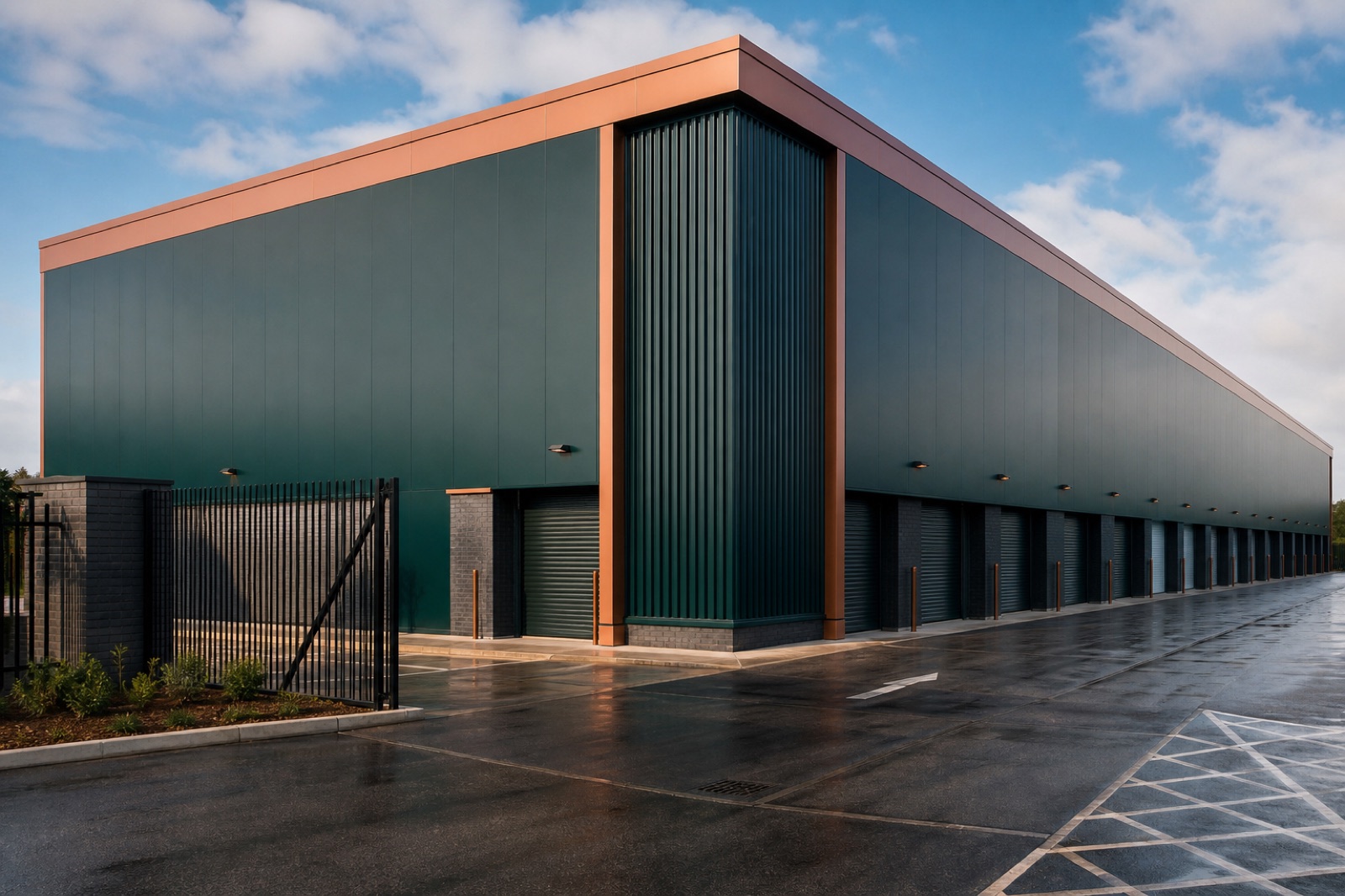
Self-storage stabilisation finance
We arrange stabilisation finance for developers and operators carrying a new or recently opened self-storage store from opening through its fill-up to a stabilised income. A new store opens close to empty and takes roughly three to five years to mature, so this is the short-dated bridge across that lease-up gap, not a regulated home loan or a personal loan.

Stabilising self-storage
Self-storage is a maturing, institutionally favoured alternative sector, with prime UK net initial yields compressed to about 5.0% and secondary around 6.0% (Savills, Q4 2025) and record sector turnover of about £1.2bn (Cushman & Wakefield / SSA UK, 2024). Overall occupancy sits near 75.1%, with mature stores closer to 79% (Cushman & Wakefield / SSA UK, 2024), the gap reflecting how many stores are still filling.
That gap is the whole point of self-storage stabilisation finance. A new store opens at low occupancy and takes roughly three to five years to fill to a mature level, so income ramps gradually rather than switching on at practical completion. Stabilisation finance is the short-dated bridge that holds the store across that lease-up window, between an opening with little income and a stabilised, mature-store income that long-term lenders will refinance.
The financing question turns on the income ramp, not on any one borrower's personal circumstances. Lenders read the lease-up curve, the rate the store is achieving against its catchment, the operator's track record across other stores, and the gap between the day-one value and the stabilised value the mature income will support. They size against loan to value during fill-up, the debt yield the current income produces, and interest cover, with a clear exit onto investment debt or a sale once occupancy matures.
We package the store, the operator and the fill-up assumptions so that lenders comfortable with self-storage can price the lease-up risk quickly, and we run the market across stabilisation, development exit and term lenders rather than approaching a single bank.
What we fund
- New-build self-storage stores filling to mature occupancy
- Recently opened stores still ramping income
- Conversions of industrial or retail units to self-storage
- Container and modular storage sites building occupancy
- Standing stores being refinanced off development debt
- Multi-store operators stabilising a new opening within a portfolio
Indicative terms
- Loan to value during fill-upCommonly around 65 to 75% of value
- TermShort-dated, typically 12 to 36 months through fill-up
- Income basisOccupancy ramping toward mature-store income
- Debt yieldTested against current and projected income
- Interest coverOften part-serviced or rolled while occupancy builds
- Key testsLease-up curve, achieved rate, operator, catchment
- ExitInvestment term refinance or sale at stabilised occupancy
Indicative only. Terms vary by lender, asset and scheme and are not an offer of finance.
How we arrange self-storage finance across the fill-up
We arrange self-storage finance around the lease-up curve and pre-agree the exit. Where a store is opening or recently opened, we place stabilisation finance commonly to around 65 to 75% of value, short-dated across the fill-up period, sized on the income the store produces today and the trajectory toward mature occupancy. Where the store was just built, development exit finance repays the development facility and buys time for occupancy to build without the pressure of a construction loan running on. Because income ramps gradually, lenders often part-service interest or allow it to roll while occupancy climbs, then test debt yield and interest cover against the maturing income. We pre-agree the route onto an investment term loan or a sale once the store reaches stabilised occupancy. We frame every figure as indicative and never as an offer; the terms a store attracts depend on its catchment, its operator and the pace of its fill-up.
What lenders test on a filling store
Lenders underwrite a self-storage store on its lease-up curve, the rate it achieves against the catchment, the operator's record across other stores, and the gap between day-one and stabilised value, then size against loan to value, debt yield and interest cover. They want evidence that occupancy is building at or ahead of plan and that the operator can drive the fill-up, because the maturing income is what underwrites the loan and the exit. As a broker with no exclusive tie, we present the lease-up evidence and the operator honestly and place the case with the lender most comfortable with self-storage ramp risk, rather than steering every store to one name. We arrange the finance; we do not lend, and we are not FCA-authorised because the lending we arrange is unregulated commercial finance.
From fill-up to a refinanceable income
A self-storage store's exit rests on reaching stabilised occupancy, after which it refinances onto investment debt or sells as a standing asset. The destination is well evidenced: prime UK self-storage net initial yields near 5.0% and secondary around 6.0% (Savills, Q4 2025), against mature-store occupancy around 79% (Cushman & Wakefield / SSA UK, 2024) and record sector turnover of about £1.2bn (2024). Occupancy did soften nationally as operators traded volume for rate, which is exactly why a lender weighs the achieved rate alongside the fill-up. Once a store stabilises, we term out the bridge onto a senior investment loan sized on the mature income, or arrange a cash-out refinance to release equity into the next opening. For a stabilisation lender, that clear route to a refinanceable, yield-priced income is what supports the loan to value on day one.
Finance that suits this asset class
- Stabilisation bridge financeCarries the store from opening through fill-up to a stabilised income.
- Development exit financeRepays the construction loan and buys time for occupancy to build.
- Lease-up financeFunds the gap while occupancy ramps toward mature-store income.
- Senior investment term loansLong-term debt once the store reaches stabilised occupancy.
- Cash-out refinanceReleases equity from a stabilised store into the next opening.
Stabilising self-storage?
A view on fundability within one working day.
Frequently asked questions
Can I get a mortgage on a storage unit?
On a whole self-storage store as an operating asset, yes: we arrange stabilisation finance through the fill-up and then a senior investment term loan once occupancy matures, sized on the income the store produces. On a single storage unit inside someone else's facility, this is not a mortgageable asset in the usual sense. What we arrange is commercial finance against a store and its income, not a regulated home loan.
What are the risks of self-storage investment?
The main finance risk is the fill-up. A new store opens close to empty and takes roughly three to five years to reach mature occupancy, so income ramps gradually and a stabilisation lender weighs how fast occupancy is building and the rate the store achieves. Occupancy softened nationally as operators traded volume for rate, so a quoted yield should be read alongside the lease-up curve and the operator's track record. We arrange finance but do not give investment advice.
How is a new self-storage store financed before it fills up?
Usually with a short-dated stabilisation bridge, commonly to around 65 to 75% of value, that carries the store from opening through the fill-up period. Because income ramps gradually, interest is often part-serviced or rolled while occupancy climbs. Where the store has just been built, development exit finance repays the construction loan first. The exit is onto an investment term loan once the store reaches stabilised occupancy.
When is a self-storage store considered stabilised?
A store is treated as stabilised once occupancy has climbed to a mature level, around 79% for established UK stores (Cushman & Wakefield / SSA UK, 2024), and the income has settled into a steady, refinanceable run rate. That is the point at which a senior investment lender will size long-term debt on the income and a stabilisation bridge can be repaid by refinance or sale.
Stabilising self-storage?
Tell us about the asset and the income plan and we will come back with a view on fundability and likely terms.